
Are you tired of feeling overwhelmed by your workload? Can you imagine having a workflow that’s not just efficient, but also enjoyable?
Adopting stress-free productivity habits can be a game-changer. By incorporating simple yet effective productivity tips into your daily routine, you can significantly boost your workflow and achieve a better work-life balance.
By making a few simple changes, you can create a more streamlined and productive work environment. This not only enhances your professional performance but also contributes to your overall well-being.
Key Takeaways
- Simple changes can lead to significant productivity gains.
- Adopting stress-free habits improves work-life balance.
- Effective productivity tips can enhance professional performance.
- A streamlined workflow reduces feelings of overwhelm.
- Productivity habits contribute to overall well-being.
Why Stress-Free Productivity Beats Hustle Culture
As the modern workplace continues to evolve, the emphasis is shifting from high-stress productivity to stress-free habits that foster long-term success. The traditional hustle culture, often glorified in media and popular culture, has been associated with burnout, decreased motivation, and a range of negative health outcomes.
The Cost of High-Stress Productivity
High-stress productivity can lead to significant personal and professional costs. Some of the most notable consequences include:
- Burnout: Chronic stress can result in emotional, mental, and physical exhaustion.
- Decreased Motivation: The relentless pressure to perform can lead to a decrease in motivation over time.
- Health Issues: High levels of stress are linked to various health problems, including cardiovascular disease, obesity, and mental health disorders.
These outcomes not only affect individuals but also impact organizations through reduced productivity, increased turnover rates, and higher healthcare costs.
How Sustainable Habits Create Better Results
Adopting stress-free productivity habits can lead to more sustainable and better results in the long run. By focusing on stress management techniques and reducing stress at work, individuals can:
- Enhance their overall well-being and job satisfaction.
- Improve their productivity and efficiency.
- Foster a positive work environment that encourages collaboration and creativity.
By prioritizing stress-free productivity, individuals and organizations can achieve a healthier balance between work and personal life, leading to greater overall success.
How to Increase Productivity with Simple Time Management Strategies
Simple yet powerful time management techniques can transform your workday and boost your productivity. By implementing a few straightforward strategies, you can manage your time more effectively and achieve your goals with less stress.

Implement Time Blocking for Deep Work
Time blocking is a powerful technique that involves scheduling large blocks of uninterrupted time to focus on important tasks. By dedicating specific times of the day to deep work, you can increase your productivity and make significant progress on complex projects.
To implement time blocking effectively:
- Identify your most important tasks that require deep work.
- Schedule fixed, uninterrupted blocks of time for these tasks.
- Communicate your availability to colleagues and minimize distractions during these periods.
Use the Two-Minute Rule for Small Tasks
The two-minute rule is a simple yet effective strategy for managing small tasks. If a task can be done in less than two minutes, do it immediately. This helps prevent small tasks from piling up and reduces the time spent on task switching.
Examples of tasks that can be completed in under two minutes include:
- Responding to a simple email.
- Making a quick phone call.
- Updating a to-do list.
Batch Similar Tasks Together
Batching similar tasks together, also known as task grouping, can significantly improve productivity. By completing similar tasks in one session, you reduce the time and mental effort required to switch between different types of tasks.
Examples of tasks that can be batched together:
- Checking and responding to all emails at once.
- Making all necessary phone calls in one session.
- Completing all data entry tasks in a single block of time.
Plan Your Day the Night Before
Planning your day the night before can help you hit the ground running in the morning. By preparing your to-do list and prioritizing tasks ahead of time, you can save morning time and reduce stress.
To plan effectively:
- Review your tasks and goals for the next day.
- Prioritize your tasks based on importance and urgency.
- Prepare any necessary materials or information you need for the next day.
Stress Free Productivity Habits for Effective Prioritization
Stress-free productivity starts with understanding how to prioritize tasks effectively. In today’s fast-paced work environment, managing tasks efficiently is crucial for achieving a balanced and productive workday. Effective prioritization enables you to focus on tasks that truly matter, reducing stress and increasing overall productivity.
Apply the Eisenhower Matrix to Your Task List
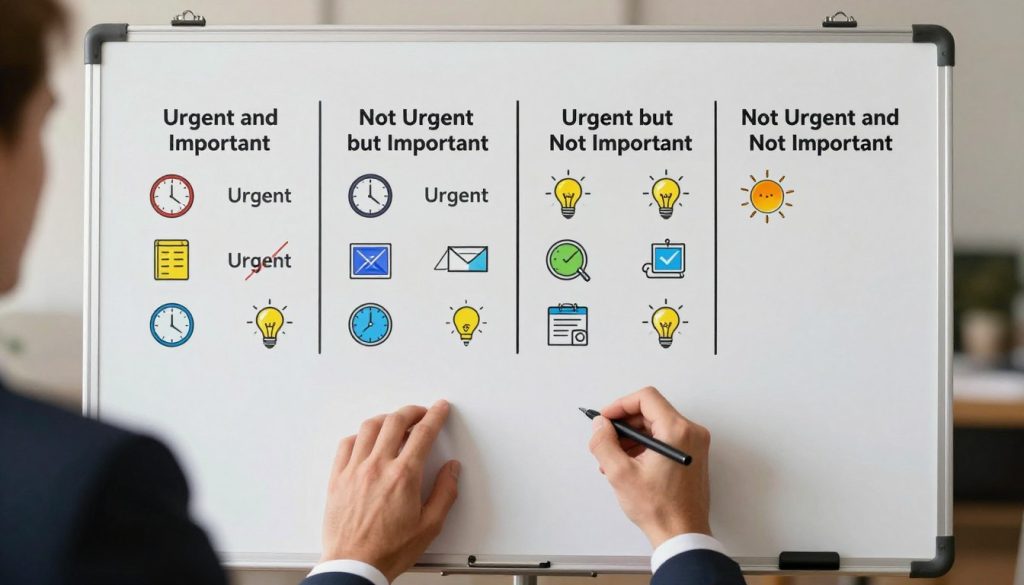
The Eisenhower Matrix is a powerful tool for categorizing tasks based on their urgency and importance. By dividing tasks into four quadrants – urgent & important, important but not urgent, urgent but not important, and not urgent or important – you can quickly identify which tasks to focus on.
- Urgent & Important: Tasks that require immediate attention, such as deadlines or emergencies.
- Important but Not Urgent: Tasks that are crucial for long-term goals, such as planning or learning new skills.
- Urgent but Not Important: Tasks that can be delegated, such as interruptions or emails.
- Not Urgent or Important: Tasks that can be eliminated, such as busywork or time wasters.
Identify Your Top Three Daily Priorities
Identifying your top three daily priorities helps you stay focused on what’s truly important. By limiting your priorities to three, you can avoid feeling overwhelmed and ensure that you’re making progress on your key tasks.
“You don’t have to be great to start, but you have to start to be great.” – Zig Ziglar
To identify your top priorities, review your task list, and ask yourself: “Which tasks will have the most significant impact on my goals?” or “Which tasks need to be completed today?”
Eliminate Low-Value Activities
Eliminating low-value activities is crucial for maximizing productivity. By identifying tasks that do not contribute significantly to your goals, you can eliminate or delegate them, freeing up more time for high-priority tasks.
| Task | Value | Action |
|---|---|---|
| Checking social media | Low | Eliminate |
| Responding to emails | Medium | Delegate or Batch |
| Project planning | High | Focus |
Design Your Work Environment for Efficient Work Habits
A well-designed workspace is essential for maintaining efficient work habits and minimizing distractions. Your work environment significantly influences your productivity and stress levels, making it crucial to optimize it for better performance.
To start, let’s explore how to create a conducive workspace. This involves both physical and digital aspects, as well as managing potential interruptions.
Create a Clutter-Free Physical Space
A cluttered workspace can lead to a cluttered mind, making it difficult to focus on tasks. Here are some tips to declutter your physical workspace:
- Remove unnecessary items from your desk and surrounding areas.
- Organize your files and documents in labeled folders.
- Use ergonomic furniture to enhance comfort and reduce physical strain.

Organize Your Digital Workspace
Just as a cluttered physical space can be distracting, so too can a disorganized digital workspace. Consider the following strategies:
- Use clear and descriptive file names for your documents.
- Organize your computer files into well-structured folders.
- Utilize cloud storage to access your files from anywhere and reduce desktop clutter.
Control Notifications and Interruptions
Notifications and interruptions are significant barriers to maintaining efficient work habits and reducing stress at work. To manage these effectively:
| Strategy | Description | Benefit |
|---|---|---|
| Turn off notifications | Disable non-essential notifications on your devices. | Reduced distractions |
| Schedule checks | Allocate specific times to check emails and messages. | Better time management |
| Communicate boundaries | Inform colleagues and family about your work hours. | Minimized interruptions |
By implementing these strategies, you can significantly enhance your work environment, leading to improved productivity and reduced stress.
Reducing Stress at Work Through Strategic Breaks
Strategic breaks are a powerful tool for managing work-related stress and enhancing your overall well-being. By incorporating breaks into your daily routine, you can improve your focus, boost productivity, and reduce the risk of burnout.

Schedule Regular Movement Breaks
Regular movement breaks can help reduce the negative effects of prolonged sitting. Schedule short breaks every hour to stretch, move around, or do a few jumping jacks. This not only improves physical health but also refreshes your mind, making you more productive.
Practice the Pomodoro Technique
The Pomodoro Technique involves working in focused 25-minute increments, followed by a 5-minute break. After four cycles, take a longer break of 15-30 minutes. This technique can help you stay focused and avoid burnout by providing regular breaks and helping you maintain a sustainable work pace.
Take True Lunch Breaks Away from Your Desk
Taking a proper lunch break away from your desk can significantly reduce stress. Use this time to relax, read a book, or take a walk. Avoid checking work emails or taking work calls during this time to fully disconnect from work-related tasks.
By implementing these break strategies, you can create a healthier work environment that supports your well-being and productivity. Remember, taking breaks is not a sign of laziness but a sign of smart work management.
Effective Stress Relief Techniques During Your Workday
In today’s fast-paced work environment, stress can quickly accumulate, making it essential to find effective relief techniques. Incorporating simple stress management techniques into your daily routine can significantly improve your productivity and overall well-being.
Use Breathing Exercises for Quick Reset
Breathing exercises are a powerful tool for managing stress. By focusing on your breath, you can calm your mind and reduce tension. Try inhaling deeply through your nose, holding your breath for a few seconds, and exhaling slowly through your mouth. Repeat this process several times to achieve a quick reset.
Practice Mindfulness for Five Minutes
Mindfulness practices can help you stay present and focused, reducing feelings of overwhelm. Take five minutes to sit quietly, focusing on your breath or a calming phrase. When your mind wanders, gently bring your attention back to your chosen focal point. This brief mindfulness exercise can help you regain clarity and composure.
Build a Pre-Work Routine That Calms Your Mind
Establishing a pre-work routine can help signal to your brain that it’s time to transition into work mode. This could involve activities like meditation, journaling, or a short walk. By starting your workday on a calm note, you’ll be better equipped to handle challenges and maintain a positive outlook. Consider incorporating elements that promote relaxation and focus, such as deep breathing or progressive muscle relaxation.
By integrating these effective stress relief techniques into your workday, you can create a more balanced and productive work environment. Remember, managing stress is an ongoing process that requires commitment and practice. Start with small steps, and be patient with yourself as you explore different techniques to find what works best for you.
Improve Your Time Management with Boundaries and Routines
Setting boundaries and establishing routines can significantly improve your productivity. By implementing these strategies, you can better manage your time, reduce stress, and achieve a more balanced work-life schedule.
Set Clear Start and End Times for Work
Defining your work hours is essential for maintaining a healthy work-life balance. By setting clear start and end times, you can avoid the temptation to overwork and allow yourself time to relax and recharge. This boundary helps prevent burnout and maintains your energy levels throughout the day.
Tip: Establish a consistent daily schedule and communicate your work hours to your family and colleagues to minimize interruptions.
Create Morning and Evening Routines
Morning and evening routines can help you transition smoothly between work and personal time. A well-crafted morning routine sets a positive tone for the day, while an evening routine helps you wind down and prepare for the next day.
- Start with a morning routine that includes activities like meditation, journaling, or exercise to boost your energy.
- Develop an evening routine that involves relaxing activities, such as reading or taking a warm bath, to signal the end of the workday.
Learn to Say No Without Guilt
One of the most effective time management strategies is learning to say no to non-essential tasks. By being mindful of your commitments, you can avoid overloading your schedule and maintain focus on your priorities.
Practice saying no: Start by politely declining requests that don’t align with your goals or values. Over time, you’ll become more comfortable asserting your boundaries.
Protect Your Calendar from Overcommitment
Managing your calendar effectively is crucial for maintaining a balanced schedule. By protecting your calendar from overcommitment, you can ensure that you have enough time for your priorities and avoid last-minute rushes.
Schedule buffers: Leave some buffer time between tasks to account for unexpected interruptions or tasks that take longer than expected.
Conclusion
By incorporating stress-free productivity habits into your daily routine, you can significantly boost your workflow and achieve a better work-life balance. The productivity tips discussed throughout this article, from effective time management strategies to stress relief techniques, are designed to help you work smarter, not harder.
As you start implementing these habits, you’ll notice a reduction in stress levels and an increase in overall productivity. Simple changes, such as scheduling regular breaks and creating a clutter-free workspace, can make a significant difference in your daily work experience.
To maintain momentum, it’s essential to be consistent and patient. Begin by introducing one or two stress-free productivity habits into your daily routine and gradually build upon them. With time, you’ll develop a personalized system that enhances your productivity and promotes a healthier work environment.
By adopting these stress-free productivity habits, you’ll be well on your way to achieving your goals while maintaining a positive and empowered mindset. Start your journey today and discover the benefits of a more streamlined, efficient, and stress-free work life.